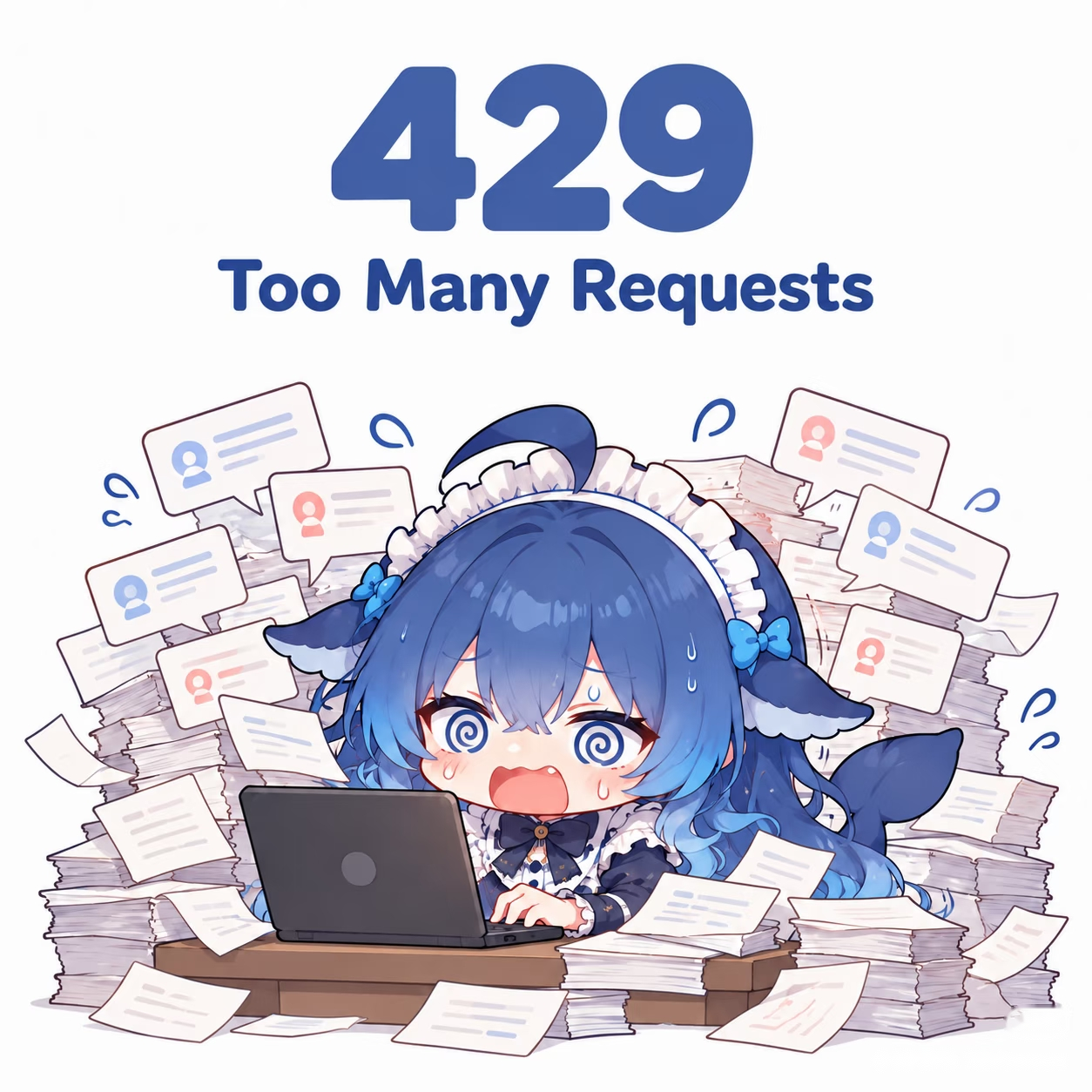
429Too Many Requests
429 Too Many Requests means the client sent too many requests in a given amount of time. It is the standard rate-limiting response, defined in RFC 6585.
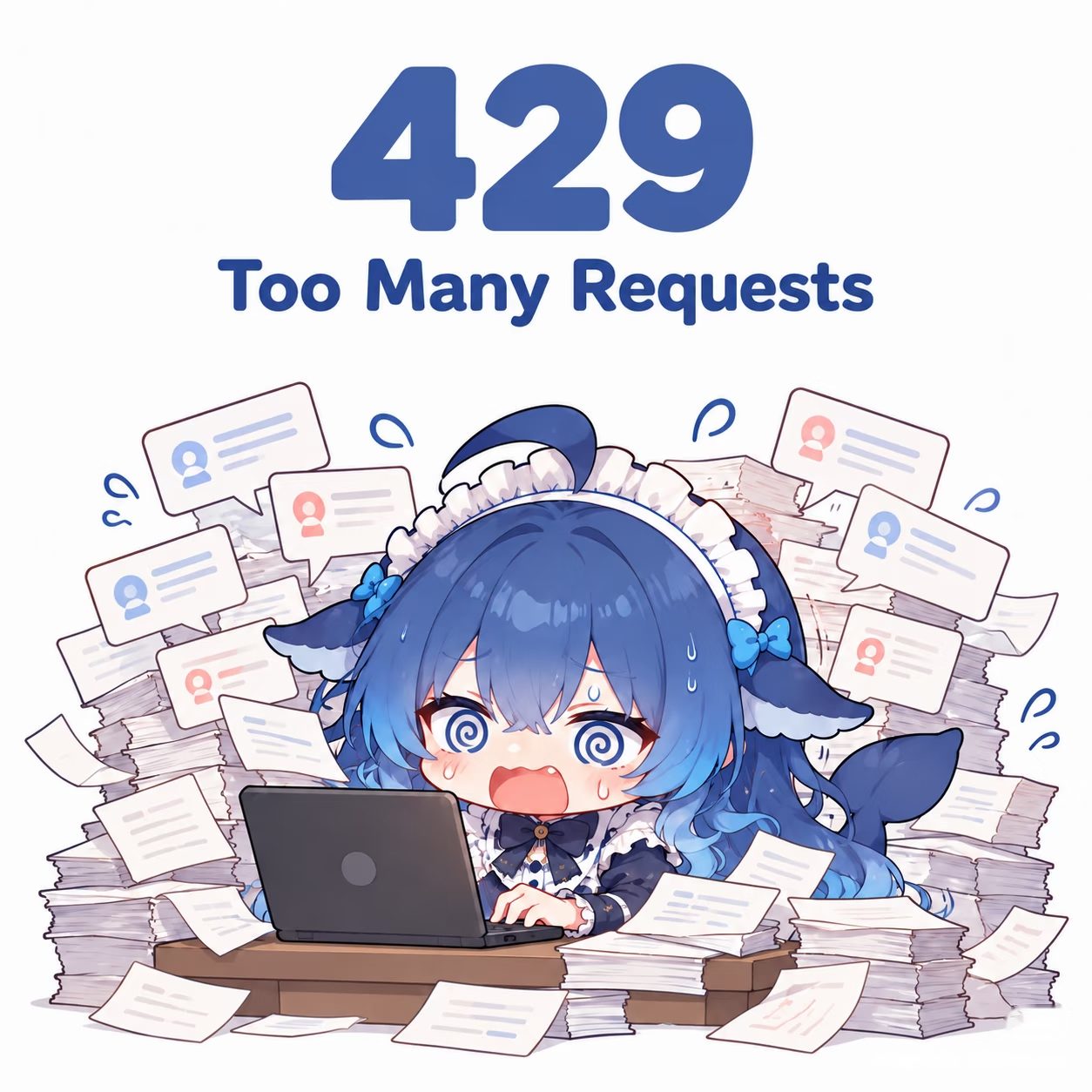
What does it mean?
The response should explain the limit and may include Retry-After, in seconds or as an HTTP date.
The spec does not define how a server identifies a user or counts requests. Limits can be per user, per IP, per token, or per resource.
When does it happen?
- API quotas or burst limits.
- Repeated login attempts.
- Scraping or bot traffic.
- A retry storm after an outage.
How do you fix it?
If you run the server
- Send Retry-After and enough detail to make the limit actionable.
- Return rate-limit headers consistently; do not change the window silently.
- Use 503 for global overload or maintenance, not 429.
If you are just visiting
- Wait for the time in Retry-After, then retry.
- Back off exponentially instead of retrying in a tight loop.